


Maritime safety is a keystone of Sri Lanka’s national maritime strategy, sustaining the country’s economic resilience, environmental protection and the well-being of seafarers and coastal communities. Positioned along one of the world’s busiest shipping lanes in the Indian Ocean, Sri Lanka carries significant responsibility in ensuring the safe, secure and sustainable use of its maritime domain.
The Sri Lanka Coast Guard (SLCG), established under the Sri Lanka Coast Guard Act No. 41 of 2009, is mandated to safeguard the nation’s maritime interests while protecting life, property, and the marine environment. With a structured operational framework, dedicated personnel, and an expanding fleet of specialized vessels, the SLCG plays an essential role in preventing maritime incidents, responding to emergencies and fostering a strong culture of safety at sea
Sri Lanka’s designated Search and Rescue Region, allocated by the International Maritime Organization (IMO), spans a vast sea area nearly twenty-seven times the nation’s landmass and borders the Australian, Indian, Indonesian and Maldivian SAR regions. The main Sea Line of Communication (SLOC) in the Indian Ocean passes through this area, with approximately 250 vessels transiting daily, in addition to hundreds of Sri Lankan multiday fishing boats operating in the high seas and the Exclusive Economic Zone (EEZ).
As a key national agency for maritime Search and Rescue, the Sri Lanka Coast Guard (SLCG) is tasked with saving lives, assisting vessels in distress and supporting post-incident operations. Through international cooperation and effective use of available assets, the SLCG continues to strengthen its SAR response capabilities and overall maritime safety within Sri Lankan waters.
The SLCG performs a wide range of duties to uphold maritime safety and security across Sri Lankan territorial waters and the Exclusive Economic Zone (EEZ). These include :-
Search and Rescue (SAR), Continuous monitoring and rapid response to distress situations involving fishermen, commercial vessels and recreational craft.
Maritime Law Enforcement, Ensuring compliance with national and international maritime regulations, including safety standards for vessels and crew.
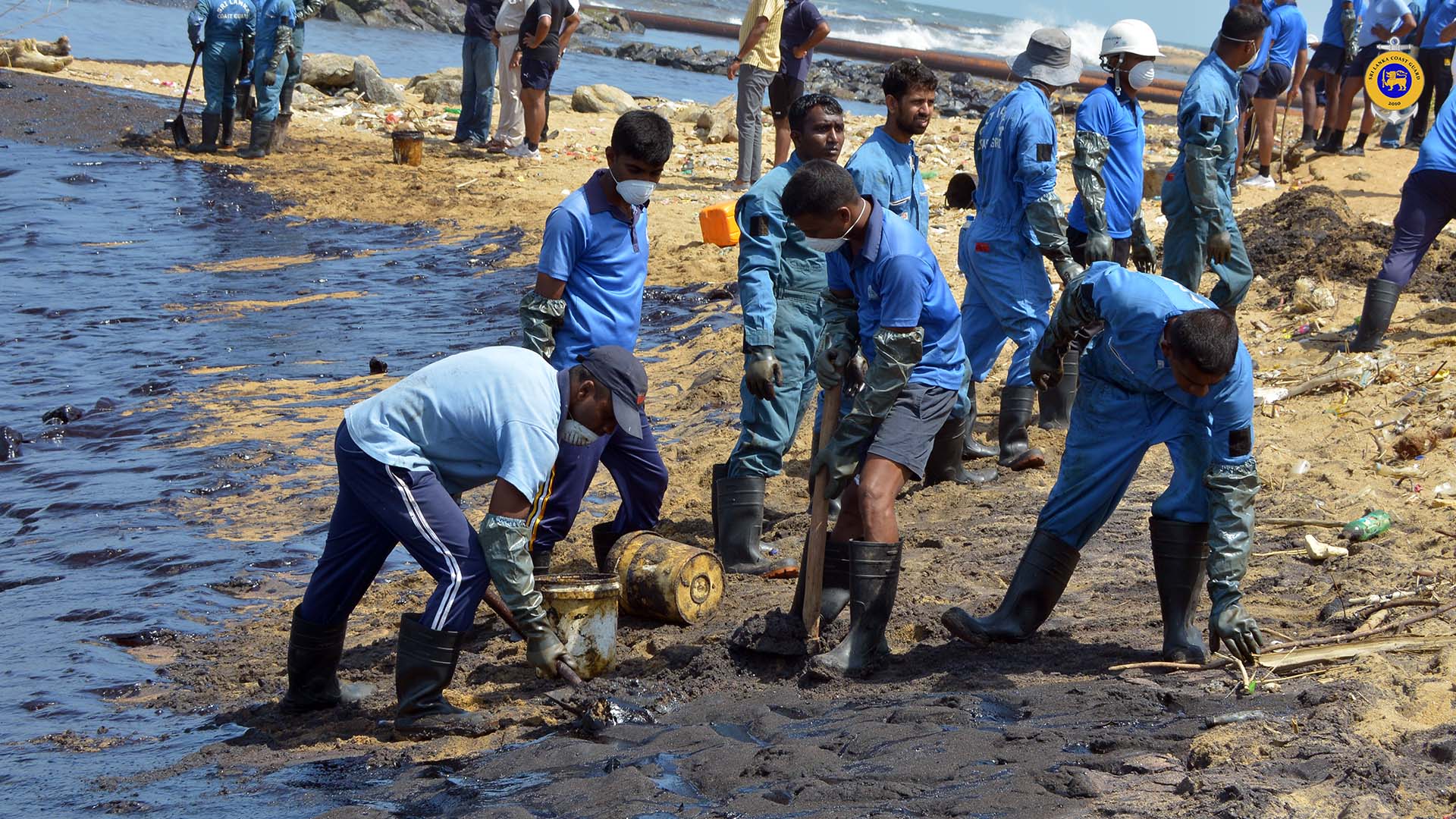
Pollution Control, Preventing and responding to incidents of marine pollution, including oil spills, chemical releases and illegal waste disposal.
Safety Compliance & Inspections, Conducting routine inspections on local fishing vessels and passenger craft to verify adherence to safety protocols.
Public Awareness & Training, Conducting Community interface programmes, safety drills and awareness campaigns to educate seafarers and coastal communities.
The SLCG has consistently demonstrated its capability to respond swiftly and effectively to marine disasters, minimizing loss of life, environmental damage and disruption to maritime operations. The process involves :-
Rapid Activation of Operations. Upon receiving an alert from the Maritime Rescue Coordination Centre (MRCC) or coastal authorities, the nearest SLN/SLCG vessel or response team is mobilized immediately. Modern communication and surveillance systems support quick situational assessment and tasking.
Coordinated Multi-Agency Response. Marine disasters often require integrated action. The SLCG works closely with and this synergy enhances the country’s emergency response effectiveness :-
Search, Rescue & Medical Evacuation. SLCG teams are trained in advanced rescue techniques and first aid. Whether rescuing fishermen adrift, responding to maritime collisions or managing capsizing incidents, the SLCG ensures the timely and professional recovery of survivors.
Oil Spill Response & Pollution Control. Using specialized oil spill response dedicated vessels, equipment, containment booms, skimmers and sorbents, the SLCG acts promptly to contain and neutralize marine pollution. Collaboration with MEPA and other stakeholders ensures scientific and regulatory oversight during operations.
Investigation & Preventive Measures. Post-incident investigations are conducted to identify root causes and recommend safety improvements. Lessons learned are shared with relevant agencies/ stakeholders to prevent recurrence and improve national maritime disaster preparedness.
The SLCG remains committed to strengthening maritime safety through continuous capacity building, technological advancement and international cooperation. This includes :-
Upgrading fleet capabilities with modern technology.
Enhancing training standards to meet global best practices.
Participating in local, regional and international exercises on maritime safety and disaster response.
Promoting health & safety best practices among local seafarers, the fishing community and other relevant parties.
As Sri Lanka continues to expand its maritime sector from fisheries and tourism to commercial shipping the importance of maritime safety cannot be overstated. The Sri Lanka Coast Guard stands at the forefront of these efforts, ensuring that the nation’s seas remain safe, secure and resilient against emerging maritime challenges.
Through its dedicated personnel, dynamic operational framework and unwavering commitment to safeguarding the marine environment, the SLCG continues to serve as a trusted guardian of Sri Lanka’s maritime domain.
Copyright © Sri Lanka Coast Guard 2024 | Designed and maintained by Sri Lanka Coast Guard Information Technology Staff

 Ministry Of Defence
 Sri Lanka Army
 Sri Lanka Navy
 Sri Lanka Air Force
 Sri Lanka Police
 NARA
NARA Marine Environment Protection Authority (MEPA)
 Ministry Of Fisheries
 Coast Conservation